
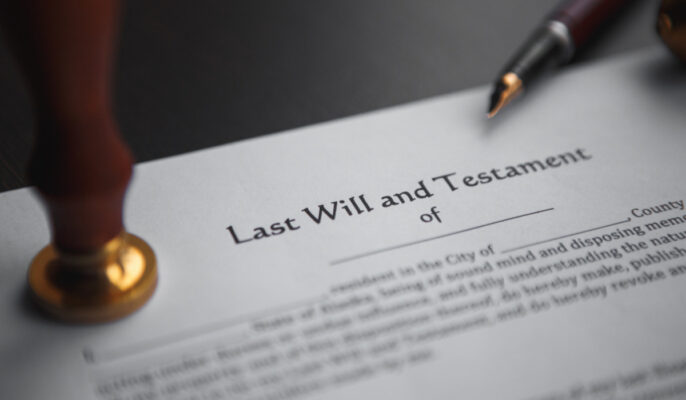
One of the most frequently asked question by my clients is- “Is it extremely necessary to make a Will?
I understand the logical reasoning behind this question. A father/mother may think- “I have two children, who are my only legal heirs and everything I own should go to my children equally. It’s a straight-forward scenario then, why to make Will…”
Let me try to explain why it is important to make a Will.
1. Ignorance about nature of joint ownership of immovable properties
- Spouses think if they own property jointly, after death of one, the entire property will go to the living spouse automatically-This is not correct.
- If there is no Will – Share of the deceased spouse will go to his/her legal heirs as per the respective Succession Law.
2. Ignorance about our own legal heirs
- This is most crucial and is not always as simple as people would assume. I will try to explain this with practical examples of cases dealt by me.
- People are not aware about their legal heirs under their respective Succession Law and that after their death, their legal heirs will get equal share in their property in absence of the Will
- For Eg-If Hindu male dies leaving behind his Mother, his Mother gets equal share in his property (movable plus immovable) along with his Children and Widow (i.e. Class-I legal heirs). This becomes complex-if Mother dies without any Will, then the share she has acquired in her pre-deceased Son’s estate will go to her legal heirs-which includes all her Children and her Husband. So, IMAGINE! in pre-deceased son’s estate-his real brothers and sisters will get share along with his widow and children and everyone’s signature will be required while selling the property plus sale consideration should be divided between all. People are completely unaware about this.
- In one another case-Hindu Father has a pre-deceased Son-This Son was staying separated from his father and relations were strained. This Son was also practically separated from his Wife (no judicial separation or divorce). When this Hindu Father expired, Widow and Children of his pre-deceased Son became his Class-I legal heirs and are entitled into the estate of this Hindu Father!
- In this final case, Hindu Mother has One Son and Daughter- Both pre-deceased her. Pre-deceased Son left his Widow behind (no children). Pre-deceased Daughter left her Son behind. Widow of pre-deceased Son i.e. Daughter- in- Law was living with her Mother-in-law and was taking care of her. But here, one important point to note that Widow of pre-deceased Son is not legal heir of Hindu Female. Fortunately, this Mother-in-law has prepared a Will and left share in her Flat in favour of her Daughter-in-Law, otherwise, the Son of pre-deceased Son would have become entitled to the whole Flat and Daughter-in-Law would have got nothing for her.
- For Parsis and Christians-separate complicated provisions are applicable.
So it is extremely important to be aware about who all are our legal heirs and who all are not – under the respective Law of Succession
3. Myths about Nomination of immovable property
- This topic deserves separate dedicated attention and will cover it at length subsequently, but will touch base on it briefly.
- It is settled law that Nominee is only a trustee and he does not become owner of property. Will prevails over nomination.
- Just because Society has transferred Share Certificate in favour of nominee, does not mean ownership is transferred. There is difference between membership of Society and ownership of flat.
4. If you wish to give anything out of your property to any person who is not your legal heir or to any institution/charitable trust-You can do it only through your Will
5. And lastly, if you don’t want your legal heirs to feel lost and clueless about your properties post your demise- Will is the way through which you can let them know about your properties, investments and how you want them to deal with same post your demise, to avoid any disputes in the family.
Ignorance of the Law is not an excuse! Hope this blog will help you to take that informed decision!